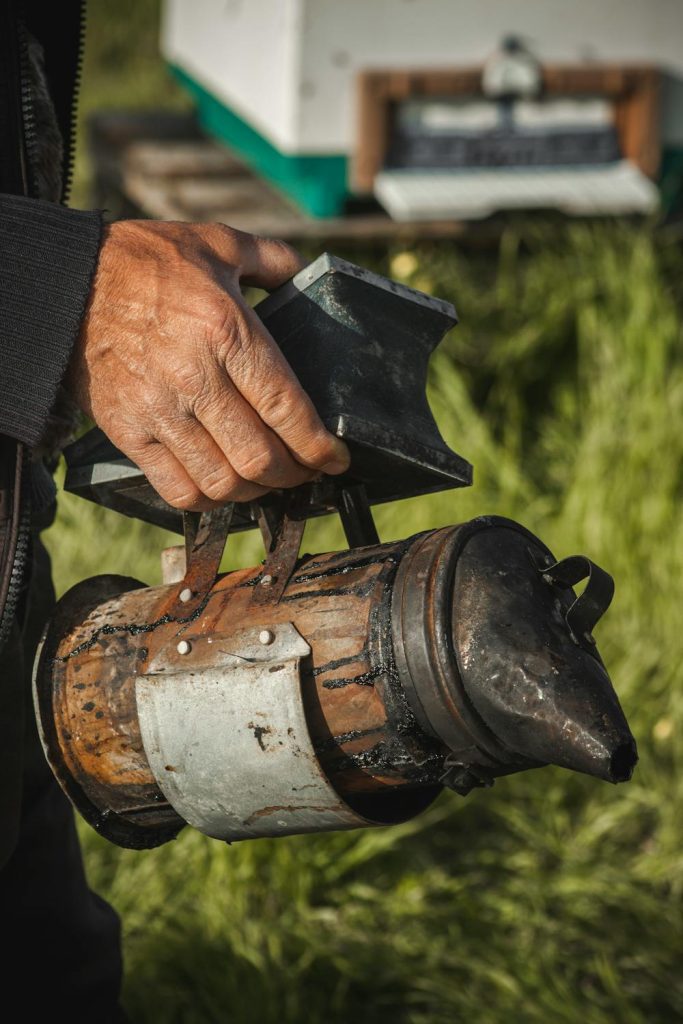
A properly operated smoker is the difference between a smooth, calm hive inspection and a chaotic, painful experience for both you and your bees. In this comprehensive guide, I’ll share everything I’ve learned about lighting, using, and maintaining a beekeeping smoker to achieve the best results.
Why Your Smoker Is Your Most Important Beekeeping Tool
When I first started beekeeping, I underestimated just how crucial the smoker would be to my success. Now, I never approach a hive without one that’s properly lit and producing good quality smoke.
The science behind why smoke calms bees is fascinating. When bees detect smoke, they instinctively prepare for a potential forest fire by gorging on honey. This feeding response makes them less defensive and less likely to sting. Additionally, smoke masks the alarm pheromones bees release when they feel threatened, preventing the colony-wide defensive response that can turn a simple hive check into a stinging frenzy.
A well-operated smoker isn’t just about your comfort—it’s about the welfare of your bees. Too much hot smoke can harm them, while ineffective smoke application can lead to unnecessary stress. Finding that perfect balance takes practice, but the guidelines I’m about to share will put you on the right path.
See More: Beekeeping Starter Kits: What Every Beginner Needs to Get Started
How to Select the Right Smoker for Your Beekeeping Needs
Smoker Sizes
In my apiary, I use different sized smokers depending on the job:
- Small smokers (4″)—Great for quick inspections or if you only manage 1-2 hives. Their compact size makes them easy to handle, but they require more frequent refueling.
- Standard smokers (7″-10″)—The workhorses of the beekeeping world and my personal go-to for most tasks. They offer a good balance between fuel capacity and handling ease.
- Large smokers (10″ and above)—Ideal for commercial operations or when you need to work through many hives. I use these when I’m spending the day doing extensive hive management.
Construction Features
After burning through several cheap smokers early in my career, I’ve learned to look for these features:
- Stainless steel construction—Resists rust and lasts for years. The extra cost pays for itself quickly.
- Heat shield—Protects your hands from burns during extended use. Trust me, this feature is non-negotiable after you’ve experienced a smoker without one.
- Sturdy bellows—Look for thick, durable material that won’t crack after exposure to the elements.
- Secure lid with good hinge—Prevents accidental spills of hot embers, which can be dangerous during dry conditions.
I’ve found that brands like Dadant, Mann Lake, and Lyson make reliable smokers that, with proper care, can last for many beekeeping seasons. While you might be tempted to save money on this tool, a quality smoker is an investment in both safety and effectiveness.

The Best Fuels for Your Beekeeping Smoker
Finding the right smoker fuel was a game-changer in my beekeeping practice. The ideal fuel creates cool, thick, white smoke that lasts a long time—without irritating the bees or leaving harmful residues.
Natural Materials
I’ve experimented with dozens of natural materials. Here are my favorites:
- Pine needles—My top choice when available. They light easily, produce pleasant, cool smoke, and are often free for the taking. I collect and dry them during fall for year-round use.
- Dried leaves—Oak leaves work particularly well. I avoid anything with a strong smell like eucalyptus, which can agitate the bees.
- Wood shavings—Untreated pine or cedar shavings (the kind sold for animal bedding) burn steadily and produce excellent smoke.
- Cardboard—In a pinch, corrugated cardboard torn into strips works surprisingly well. I avoid glossy or colored prints that might contain chemicals.
- Burlap—Natural burlap (not synthetic) produces long-lasting smoke. Old coffee bags are perfect if you can find them.
Commercial Fuels
When I don’t have time to gather natural materials, these commercial options have served me well:
- Compressed cotton fuel—These burn slowly and produce consistent smoke quality.
- Wood pellets—The same type used for pellet grills work wonderfully and are relatively inexpensive.
- Commercial smoker fuel—Pre-packaged fuels from beekeeping suppliers are convenient but tend to be pricier than natural alternatives.
Materials to Absolutely Avoid
Through trial and error (and a few mistakes), I’ve learned to stay away from:
- Green plant material—Creates hot, wet smoke that can irritate bees and potentially harm them.
- Treated wood—Contains chemicals toxic to both you and your bees.
- Synthetic fabrics—Can release harmful compounds when burned.
- Newspaper with colored ink—The inks may contain metals and chemicals best kept away from honey production.
I keep a dedicated container of dried fuel near my beekeeping equipment, ensuring I’m never caught unprepared for a hive inspection. Having good fuel ready to go makes lighting your smoker much easier, which brings us to our next critical topic.

How to Light Your Smoker
Lighting a smoker effectively took me more practice than I’d like to admit. Now, it’s second nature, and I can get a good smoke going in minutes. Here’s my foolproof method:
1. Prepare Your Workspace
Before lighting anything, I make sure:
- I’m in an open area away from flammable materials
- I have all my fuel accessible
- A water source is nearby (safety first!)
- My smoker is clean and free of obstructions
2. Create Your Starter Material
I begin with easily combustible material that catches flame quickly:
- A small handful of dry grass or pine needles works well
- Crumpled newspaper (black and white print only)
- A couple of pine cones when available
3. Light the Starter and Establish the Base
Here’s where technique makes all the difference:
- Place your starter material loosely in the bottom of the smoker
- Light it directly with a match or lighter
- Once it catches, gently pump the bellows to provide oxygen
- When you see flames (not just smoke), it’s time for the next step
4. Build Your Fire Gradually
This layering technique has never failed me:
- Add small amounts of your main fuel on top of the flame
- Pump the bellows to ensure it catches
- Continue adding fuel in small increments
- Alternate between loose and more compressed materials
5. Achieving the Perfect Smoke
I know my smoker is properly lit when:
- It produces thick, white smoke (not thin blue smoke)
- The smoke feels cool on my hand when held 6 inches from the spout
- There’s no visible flame coming from the nozzle
- A gentle pump of the bellows produces a consistent puff of smoke
6. Finishing the Lighting Process
Once I have good smoke production:
- Fill the smoker chamber about three-quarters full with fuel
- Pack it down gently (but not too tight)
- Top with a small handful of green grass or a crumpled green leaf to act as a “plug” that keeps sparks in while cooling the smoke
- Close the lid securely

Troubleshooting Common Lighting Problems
When things don’t go as planned, here’s what I do:
- Smoker keeps going out—Fuel is likely too densely packed. Empty some out and start with a looser arrangement.
- Smoke is hot and thin—Add more fuel and some slightly damp material on top to cool the smoke.
- Excessive flames—Your fuel is too dry or you’re pumping too much. Add slightly damper material on top.
- Smoke smells acrid or harsh—Change your fuel; you might be using something with resins or chemicals.
Remember that practice makes perfect. Even after years of beekeeping, I occasionally have to relight my smoker. Don’t get discouraged if it takes a few attempts—it’s part of the learning process.
How to Use Your Smoker Effectively During Hive Inspections
Before Opening the Hive
I always start by:
- Checking that my smoker is producing good quality smoke
- Approaching the hive from the side or back (never blocking the entrance)
- Giving a few gentle puffs of smoke at the hive entrance
- Waiting about 30 seconds to allow the bees to start their feeding response
This initial smoke application is critical—it starts the calming process before any hive manipulation occurs.
During the Inspection
As I work through the hive, I follow these guidelines:
- Apply smoke with purpose—I direct smoke specifically where I’ll be working next, not randomly throughout the hive.
- Watch the bees’ behavior—When bees start raising their abdomens and fanning their wings (a pre-attack position), that’s my cue to apply more smoke.
- Smoke the top bars before removing frames—A light puff across the top bars drives bees down between the frames, reducing the chance of crushing them.
- Less is more—I use just enough smoke to keep the bees calm. Excessive smoke can disrupt the hive unnecessarily and taint honey.
The “Two-Puff Rule”
I’ve developed what I call the “two-puff rule”:
- Give two gentle puffs of smoke
- Wait and observe the bees’ reaction
- Only apply more if they remain agitated
This measured approach prevents oversmoking while ensuring adequate calming effect.
Different Colonies Need Different Approaches
I’ve noticed significant variations in how colonies respond to smoke:
- Gentle Italian bees typically need minimal smoke
- More defensive varieties like Carniolan or Russian bees might require more frequent application
- Africanized colonies benefit from slightly more smoke and longer waiting periods before manipulation
Learning to “read” your specific colonies is an art that develops over time. I adjust my smoking technique based on each hive’s temperament, the season, and even the weather conditions.
How to Maintain Your Smoker During Use
Keeping your smoker functioning throughout your inspection is crucial—there’s nothing worse than a smoker that dies out halfway through opening a hive.
Keeping the Fire Going
I’ve developed these habits to maintain consistent smoke production:
- Tap the side of the smoker occasionally—This helps ash settle and prevents clogging.
- Add small amounts of fuel regularly—Don’t wait until it’s almost out before refueling.
- Position the smoker upright when not in use—Laying it on its side can smother the fire.
- Give a few pumps every few minutes—Even when you’re not actively using the smoke, this keeps air flowing and the fire burning.
The “Smoke Check” Routine
Every 5-10 minutes during an inspection, I perform a quick “smoke check”:
- Pump the bellows a few times
- Verify good smoke volume and quality
- Add a small handful of fuel if needed
This preventative approach ensures I’m never caught with a dead smoker when I need it most.
Temperature Management
A smoker that gets too hot can be dangerous and produce poor quality smoke. I manage this by:
- Balancing dry and slightly damp materials—Adding a small amount of green material cools the smoke.
- Never filling the smoker completely full—Leave some space for air circulation.
- Using the heat shield properly—Keep it positioned to protect your hands and anything the smoker might contact.
I’ve learned to check the temperature of my smoker by holding my hand about 6 inches from the spout—the smoke should feel cool or barely warm, never hot.
Safety Practices I Never Compromise On
Beekeeping smokers involve open flame and hot materials, so safety is paramount in my practice:
- I always place my smoker on a non-flammable surface when not in hand
- I carry a spray bottle of water during dry conditions
- I thoroughly extinguish the smoker after use by plugging the nozzle with grass
- I never leave a lit smoker unattended, even for a moment
- I check the area thoroughly before departing to ensure no hot embers remain
One safety habit that’s saved me trouble: I keep my smoker in a metal bucket during transport from one apiary to another. This simple precaution prevents accidental fires in my vehicle or equipment.
Proper Smoker Maintenance and Care
A well-maintained smoker will serve you for many years. My oldest smoker is approaching 15 years of service, thanks to these maintenance practices:
After Each Use
Once I’ve finished my hive inspections, I:
- Allow the smoker to cool completely
- Empty all ash and unburned material
- Use a small wire brush to clean the inside of the fire chamber
- Check the bellows for proper operation
- Ensure the air intake hole is clear
Monthly Maintenance
On a monthly basis during active beekeeping season, I perform a more thorough maintenance:
- Disassemble the smoker (removing the fire chamber if possible)
- Scrape any creosote buildup from the inside with a putty knife
- Check all moving parts for proper function
- Inspect for any cracks or damage
- Oil the hinge (if needed) with food-grade mineral oil
Preventing Rust and Corrosion
Moisture is the enemy of your smoker. I prevent rust by:
- Storing my smoker in a dry place
- Occasionally wiping the inside with a light coat of vegetable oil
- Addressing any rust spots immediately with fine steel wool
- Using a silica gel packet in my storage container during humid conditions
When to Replace Parts or the Entire Smoker
Even with excellent care, parts will eventually wear out. I look for these signs that components need replacement:
- Bellows—Cracks, air leaks, or reduced pumping efficiency
- Fire chamber—Severe rust, holes, or warping
- Air intake—Clogging that can’t be cleared or damage to the mechanism
- Heat shield—Significant damage that compromises its protective function
Most quality smokers have replacement parts available, which is more economical than replacing the entire unit. I’ve found that spending a little more on a high-quality smoker ultimately saves money over the years.
Advanced Smoker Techniques for Different Conditions
As my beekeeping has evolved, I’ve developed specialized approaches for different scenarios:
Seasonal Adjustments
- Spring inspections—I use less smoke as colonies are typically gentler and smaller.
- Summer management—During honey flow, I’m extra careful about smoke contamination near honey supers.
- Fall preparations—Colonies can be more defensive as they protect winter stores, so I use slightly more smoke.
- Winter checks—On warmer winter days when quick inspections are possible, I use minimal smoke to avoid disrupting the cluster.
Working in Challenging Weather
Weather significantly affects both bee temperament and smoker performance:
- Windy conditions—I position myself to prevent smoke from blowing away from the hive and use a slightly damper fuel mix that produces thicker smoke.
- Rain or high humidity—I use the driest fuel possible and keep extra fuel protected from moisture.
- Extreme heat—Bees can be more defensive, so I work earlier in the day and ensure my smoke is especially cool.
- Cold but workable days—I minimize smoke to avoid cooling the hive unnecessarily.
Working With Different Bee Species
Different bee varieties respond uniquely to smoke:
- For my gentle Italian colonies, I use minimal smoke and a light touch
- My Carniolan bees respond well to moderate smoke but get agitated if oversmooked
- When working with more defensive Russian or Buckfast hybrids, I apply smoke more frequently but still in measured amounts
Paying attention to these nuances has made me a more effective and responsible beekeeper.
Conclusion: The Art and Science of Smoker Management
Mastering your beekeeping smoker is truly a blend of art and science. The science involves understanding bee behavior, combustion principles, and safety requirements. The art comes from developing the intuition to know exactly when, where, and how much smoke to apply for each unique situation.
Remember that developing good smoker skills takes practice. Be patient with yourself as you learn, and pay attention to how your bees respond to different techniques. Over time, you’ll develop your own personal approach that works for your specific circumstances.
Most importantly, approach your smoker use with respect—both for the power of fire and for the well-being of your bees. Used properly, your smoker will be the most valuable tool in your beekeeping arsenal for years to come.


Leave a Reply