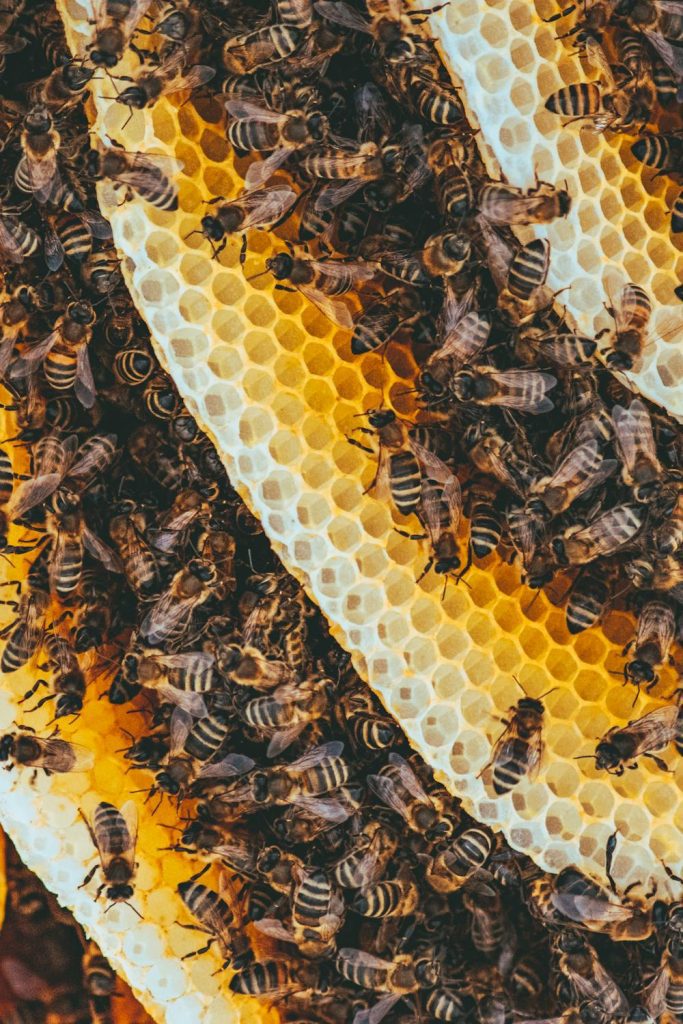
While the queen bee might get all the royal attention and drones have their moment in the spotlight during mating season, it’s the worker bees who truly fascinate me as the unsung heroes of the hive. Worker bees make up about 98% of the colony’s population, yet many people don’t realize just how diverse and complex their roles actually are. These female bees aren’t simply buzzing around collecting nectar – they’re part of one of nature’s most sophisticated social structures, with each bee performing different jobs throughout her lifetime.
In this article, I’ll take you deep inside the beehive to reveal what worker bees actually do, how their roles change as they age, and why their collective efforts create one of the most efficient and productive societies in the natural world.
The Life Cycle of a Worker Bee: Short but Purposeful
Every worker bee begins her journey as a tiny egg, laid by the queen in an individual hexagonal cell. After three days, this egg hatches into a larva – a small, white, worm-like creature with an enormous appetite. Nurse bees feed this larva a mixture of honey, pollen, and glandular secretions around 1,300 times per day!
After about six days of rapid growth, the cell is capped with wax, and the larva spins a cocoon around itself. During the pupal stage, the bee transforms dramatically, developing all the features of an adult bee – compound eyes, three pairs of legs, wings, a stinger, and more. On the 21st day from when the egg was laid, a fully-formed adult worker bee chews her way out of the cell and joins the workforce.
What always strikes me about worker bees is how brief yet impactful their lives are. During the busy summer months, a worker bee typically lives just 5-6 weeks. Their wings literally wear out from flying up to 500 miles in their lifetime! In winter, when the colony slows down and bees remain clustered in the hive, workers can live 4-6 months.
The most fascinating aspect of worker bees’ lives is how their job responsibilities change as they age – a phenomenon scientists call age polyethism. Rather than staying in one role their entire lives, worker bees progress through a series of jobs, each requiring different skills and serving different needs of the colony. This career progression is partly driven by the development of different glands in the worker bee’s body as she ages.
Let’s look at each stage of a worker bee’s career in detail.
Nursing Duties: The First Days of Service
When a worker bee first emerges from her cell, she doesn’t immediately fly off to collect nectar. For the first three weeks of her life, she’ll remain inside the hive, performing various housekeeping and maintenance tasks.
Cell Cleaning and Preparation (Days 1-3)
A worker bee’s first job is humble but essential: cleaning. Young worker bees clean out cells where other bees have emerged, removing the discarded pupal cocoon and polishing the cell walls with propolis (a resinous mixture collected from tree buds). This cleaning prepares the cells for the queen to lay new eggs or for storing honey and pollen.
I’ve watched young bees meticulously inspect cells, using their mouthparts to scrape away the tiniest bits of debris. This attention to detail is crucial for maintaining hive hygiene and preventing disease. During this phase, their hypopharyngeal glands (located in their heads) begin developing, which will soon allow them to produce food for the brood.
Brood Feeding (Days 3-12)
Between days 3-12, worker bees become nurse bees, with their primary responsibility being feeding and caring for developing larvae. At this point, their hypopharyngeal glands are fully developed, allowing them to produce royal jelly – a protein-rich secretion that’s fed to all larvae during their first three days of development.
After the third day, most larvae receive a mixture of honey and pollen (sometimes called “bee bread”), while future queens continue to receive royal jelly throughout their development. A single nurse bee can care for up to 200 larvae per day, checking each cell multiple times an hour to ensure the larvae have adequate food.
Attending to the Queen (Days 6-12)
Some nurse bees also serve as attendants to the queen, forming what’s often called the “queen’s court.” These bees surround the queen, feeding her royal jelly, grooming her, and removing her waste. They also help spread her pheromones throughout the hive, which regulates many aspects of colony behavior.
I’ve often been amazed watching this queen-worker interaction. The attendant bees are constantly touching the queen with their antennae, passing food to her, and then spreading her pheromones to other workers. This communication network helps maintain colony cohesion and ensures all bees know the queen is present and laying eggs properly.
Hive Maintenance: The Middle Career Phase
Around day 12, worker bees transition to a new set of responsibilities focused on hive construction and maintenance. Their bodies undergo physiological changes to prepare them for these roles.
Wax Production and Comb Building (Days 12-18)
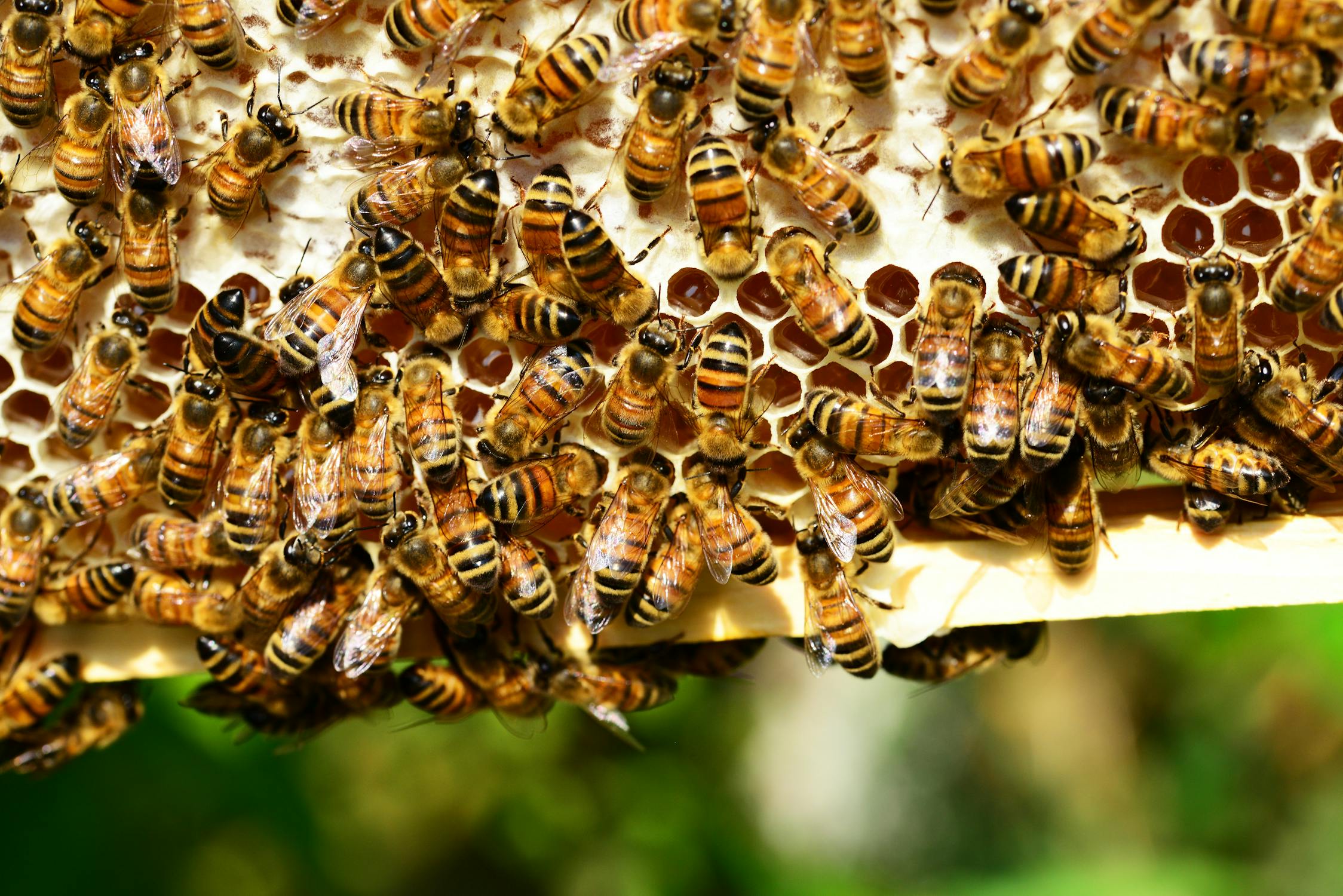
Between days 12-18, a worker bee’s wax glands develop and become active. These glands, located on the underside of the abdomen, produce tiny flakes of beeswax. The bees collect these wax scales with their legs, chew them to make them pliable, and then use them to build or repair honeycomb.
Building comb is one of the most remarkable feats of engineering in nature. Worker bees construct perfect hexagonal cells, consistently 5.2 mm across for worker cells and 6.4 mm across for drone cells. The precision is incredible – the cell walls are just 0.073 mm thick!
I’ve spent hours watching my bees build comb, passing wax scales from bee to bee in a bucket brigade, molding and shaping until the honeycomb takes form. A strong colony can build many square inches of comb per day when conditions are right, and they’ll need it – for raising brood, storing pollen, and ripening nectar into honey.
Food Processing and Storage (Days 12-18)
These middle-aged worker bees also receive nectar from foragers returning to the hive. They take the nectar into their honey stomachs, add enzymes that begin breaking down complex sugars into simpler ones, and then deposit the partially processed nectar into cells.
The bees will fan their wings over the open cells to evaporate excess moisture from the nectar, reducing its water content from about 80% to less than 18%. Once properly dehydrated, this substance is what we call honey, and the bees seal it with a wax cap for long-term storage.
Similarly, pollen collected by foragers is mixed with nectar and enzymes to create “bee bread,” which is packed into cells as a protein-rich food source for the colony. A single colony can store dozens of pounds of pollen to sustain them through periods when fresh pollen isn’t available.
Climate Control (Days 12-18)
One of the most crucial maintenance tasks is regulating the hive’s internal temperature and humidity. Brood needs to be kept at a constant temperature of 94-97°F (34-36°C) to develop properly, regardless of outside conditions.
In hot weather, worker bees collect water and spread it throughout the hive. They then position themselves throughout the hive and fan their wings vigorously, creating air currents that evaporate the water and cool the hive – nature’s air conditioning system! Some bees may also form “beards” outside the hive entrance on extremely hot days to reduce heat inside.
Conversely, in cold weather, workers form a tight cluster around the brood nest and queen, vibrating their flight muscles to generate heat without actually flying. I’ve measured the temperature inside winter clusters at 90°F (32°C) when outside temperatures were below freezing!
Undertaker Duties (Days 12-18)
Hive sanitation is crucial for preventing disease, so certain worker bees take on the role of undertakers. They identify dead bees or larvae, carry them out of the hive, and drop them far enough away to prevent contamination. The ability to recognize and remove dead colony members helps prevent the spread of diseases and parasites within the crowded hive environment.
I’ve watched undertaker bees working through the night to remove casualties, tirelessly dragging bodies several times their own weight. Their dedication to keeping the hive clean continues to amaze me, even after all my years as a beekeeper.
Guard Duties: Protecting the Colony
As worker bees reach about 18 days of age, many transition into guard bees, stationed at the hive entrance to protect against intruders.
Entrance Defense (Days 18-21)
Guard bees check the identity of every bee attempting to enter the hive by detecting colony-specific pheromones. Bees from the same colony are allowed in, while intruders – including bees from other colonies trying to steal honey – are challenged and often driven away. Guards also defend against other threats like wasps and hornets.
I’ve seen guard bees instantly recognize and challenge wasps approaching the hive entrance. They’ll form a ball around larger predators like hornets, vibrating their flight muscles to generate heat and effectively “cooking” the intruder. This behavior, called “heat balling,” shows the remarkable defensive strategies bees have evolved.
Alarm Response and Sacrifice (Days 18-21)
When a guard bee stings a mammalian threat (like a human or bear), her barbed stinger remains embedded in the skin, and she tears away, sacrificing her life for colony defense. As she pulls away, the sting apparatus releases alarm pheromone, which smells like banana to human noses and alerts other bees to the threat.
This ultimate sacrifice illustrates the worker bee’s commitment to the colony over individual survival. It’s important to note that bees don’t want to sting – it’s a last resort since it results in their death. They can and do sting other insects repeatedly without dying, as their stingers don’t become lodged in insects’ more flexible exoskeletons.

Foraging: The Final Career Phase
Around day 21, worker bees typically begin their final job phase as foragers, venturing outside the hive to collect the resources the colony needs. This transition is marked by changes in brain chemistry and behavior, as the homebodies become explorers.
Resource Collection (Days 21 until death)
Forager bees collect four critical resources:
- Nectar: The carbohydrate source used to make honey
- Pollen: The protein source needed for raising brood
- Water: Used for cooling the hive and diluting honey for consumption
- Propolis: A resinous mixture collected from tree buds and used as a “bee glue” and antimicrobial agent in the hive
Most foragers specialize in collecting primarily one resource, becoming more efficient through repetition. A nectar forager might visit 50-100 flowers per trip and make 10-15 trips per day. They can carry up to 80% of their body weight in nectar, stored in their honey stomach (a specialized organ separate from their digestive system).
Navigation and Communication
What truly sets forager bees apart is their navigational ability and communication system. Foragers use the sun as a compass, compensating for its movement across the sky throughout the day. They also create mental maps of their surroundings, remembering landmarks to find their way to and from food sources up to 5 miles (8 km) from the hive.
The famous “waggle dance,” first decoded by Karl von Frisch (who won a Nobel Prize for this work), allows successful foragers to communicate the location of rich food sources to their hive mates. The direction of the dance indicates the direction relative to the sun, while the duration of the waggle run indicates distance. The vigor of the dance conveys the quality of the food source.
I’ve spent countless hours watching these dances on my observation hive. It’s remarkable to see a forager return, perform her dance, and then watch other foragers exit the hive and fly directly to the indicated location – sometimes a specific patch of flowers more than a mile away!
Scouting for New Resources
Some foragers take on specialized roles as scouts. When flowers that have been providing nectar begin to fade, scouts search for new nectar sources. Similarly, if the hive becomes overcrowded and the colony prepares to swarm, scout bees search for suitable locations for a new hive, evaluating factors like cavity size, entrance orientation, and protection from the elements.
When scouts find potential new home sites, they return to the swarm and perform waggle dances to recruit other scouts to inspect their discoveries. Through an incredible democratic process, the colony ultimately reaches consensus on the best location based on the number and enthusiasm of dancers for each site.
Lesser-Known Worker Bee Jobs
Beyond these major career phases, certain worker bees take on specialized roles that are less well-known but equally important to colony success.
Water Carriers
During hot weather, specialized foragers focus exclusively on collecting water. These water carriers make repeated trips to nearby water sources, sometimes visiting the same puddle, pond edge, or birdbath hundreds of times per day.
I provide shallow water dishes with pebbles near my hives during summer, and it’s fascinating to watch the same marked bees return repeatedly throughout the day. They’re literally the hive’s water delivery service!
Propolis Collectors
Some foragers specialize in gathering propolis, a sticky resinous substance collected from tree buds and sap flows. Bees use propolis to seal small cracks in the hive, reduce the size of entrances when needed, and even embalm small intruders (like mice) that die inside the hive and are too large to remove.
Propolis has powerful antimicrobial properties and helps keep the hive environment sterile despite housing tens of thousands of bees in close quarters. Recent research has shown that colonies actively collect more propolis when facing disease challenges.
Mortuary Bees
While undertaker bees remove dead colony members, mortuary bees take this a step further by flying corpses far from the hive – sometimes hundreds of yards away – to prevent disease and parasite transmission. This specialized behavior helps maintain colony health in the face of various pathogens.
The Collective Intelligence of Worker Bees
What continues to fascinate me most about worker bees is not just their individual tasks, but how their collective efforts create an entity that functions almost like a single organism. Scientists often refer to honey bee colonies as “superorganisms” because no individual bee can survive long-term without the colony, yet together they solve complex problems.
Swarm Intelligence
The concept of “swarm intelligence” describes how relatively simple individual behaviors can create complex, adaptive group behavior without central coordination. For example, when thousands of worker bees adjust their fanning behavior in response to local temperature conditions, the colony as a whole maintains precise temperature control throughout the hive.
Similarly, when the colony needs more of a particular resource – say pollen for raising brood – subtle changes in feedback mechanisms can shift more foragers toward collecting that resource without any bee actually “deciding” this should happen.
Decision-Making Processes
Perhaps the most remarkable example of collective intelligence is the colony’s decision-making process during swarming. When scout bees locate potential new nest sites, they return and perform waggle dances on the swarm surface to advertise their discoveries. Other scouts check out these locations and, if impressed, begin dancing for the same site.
Through this process of dance, evaluation, and recruitment, the colony essentially “votes” with their bodies until a quorum is reached for the best site. No single bee directs this process – it emerges from their interactions. Studies have shown that this democratic process leads to optimal decisions about 80% of the time, which is remarkably efficient.
What Worker Bees Teach Us
After working with honey bees, I’ve come to appreciate them not just for their honey and pollination services, but for the profound lessons they offer:
- Specialization with flexibility: Worker bees specialize in age-appropriate tasks but can adapt when the colony’s needs change. After a major storm damaged one of my hives and killed many foragers, I observed younger nurse bees accelerating their development to become foragers earlier than normal, responding to the colony’s changed needs.
- Individual purpose within collective success: Each worker bee’s life is brief but meaningful, contributing to something larger than herself. The colony survives for years while individual bees live weeks, yet each bee’s contribution matters.
- Constant adaptation: Worker bees continuously respond to changing conditions, adjusting their behavior and activities based on weather, floral resources, colony needs, and threats.
- Efficiency through cooperation: The hive accomplishes incredible feats through cooperation rather than competition. A colony can produce 60-100 pounds of surplus honey in a good season – each bee contributing her small part to this impressive whole.
Conclusion: The Tireless Worker Bees Behind the Scenes
Next time you see a honey bee visiting a flower in your garden, take a moment to appreciate the complex life she leads. That forager you’re watching might have spent her first three weeks cleaning cells, feeding larvae, building comb, processing food, guarding the entrance, and now, in the final phase of her short life, she’s flying miles each day to collect the resources her colony needs.
Worker bees truly are the backbone of the honey bee colony – their diverse roles and selfless efforts ensure the survival of their species and, through pollination, support our food systems and ecosystems. Though individual bees are small, their collective impact is enormous.
As I continue my beekeeping journey, I’m constantly learning from these remarkable insects. Their complex social structure, division of labor, and collective problem-solving continue to inspire researchers in fields from biology to computer science, architecture to robotics.
The more we understand about what worker bees actually do inside the hive, the more we can appreciate their complexity and importance – and the more we can learn from their example of cooperation, purpose, and adaptability.
Want to learn more about honey bees or get started with beekeeping? Check out my other articles on sustainable beekeeping practices, how to plant a bee-friendly garden, and essential equipment for beginning beekeepers.




Leave a Reply