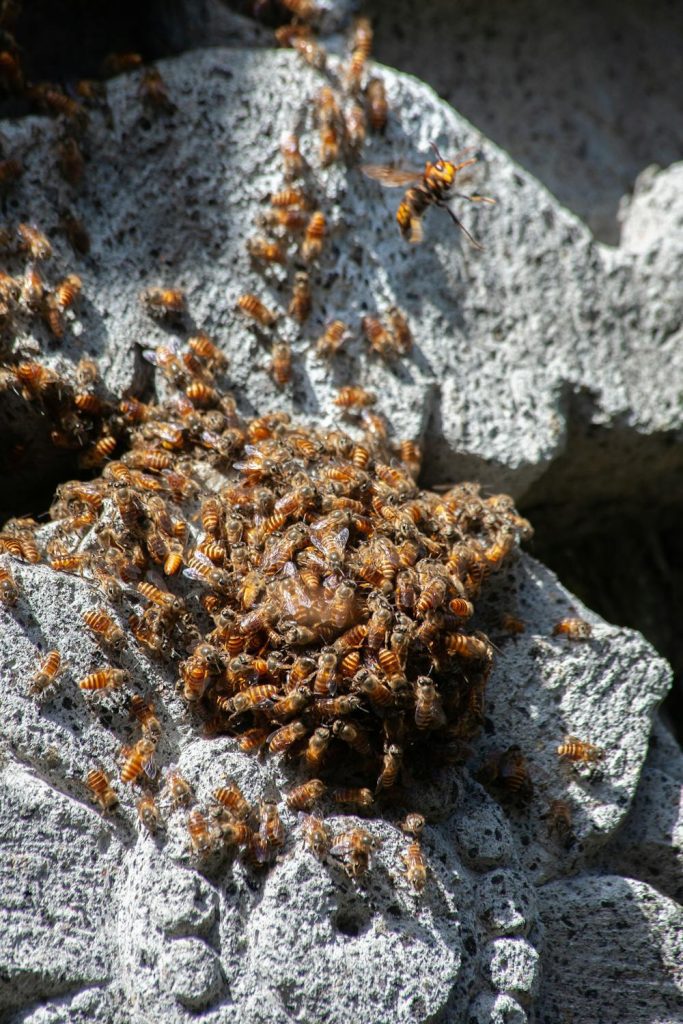
I’ve always been fascinated by the complex social structure within the honeybee colony. While the industrious worker bees and the commanding queen often steal the spotlight, today I want to shine some light on the misunderstood and often overlooked members of the hive: drone bees.
If you’ve ever peered into a bustling beehive during the warm season, you might have spotted these larger, bulkier bees amidst their sisters. But what exactly are these mysterious male bees doing? Are they really just lazy hive members waiting for their one moment of glory, or is there more to the drone’s story?
In this comprehensive guide, I’ll take you deep inside the world of drone bees, exploring their unique biology, surprising roles, and the fascinating evolutionary strategies behind their existence. Let’s get started, you’re about to discover why drones deserve our attention and appreciation.
The Unique Biology of Drone Bees
The first time I spotted a drone in one of my hives, I was struck by how different it looked from the workers I was accustomed to seeing. Drones stand out in the colony with their stocky bodies and large, bulging eyes that meet at the top of their heads – a feature that gives them exceptional vision for spotting queens during mating flights.
Measuring approximately 15-17mm long, drones are noticeably larger than worker bees (12-13mm) but smaller than the queen (18-20mm). Their bodies appear rounder and more robust, with blunt abdomens rather than the pointed ends of their female counterparts.
One of the most significant biological differences is what drones lack: they have no stinger, no pollen baskets, and reduced wax glands. Without these tools for defense, foraging, and hive-building, drones seem ill-equipped for colony life. But nature has its reasons.
Perhaps the most fascinating aspect of drone biology is their genetic makeup. Unlike the female bees in the colony (workers and queens), who develop from fertilized eggs and have two sets of chromosomes (diploid), drones develop from unfertilized eggs and have only one set of chromosomes (haploid). This phenomenon, called haplodiploidy, means that drones have no fathers – only maternal grandfathers!
This unique genetic arrangement has profound implications. Since drones develop from unfertilized eggs, they carry only their mother’s genetic material. When they produce sperm cells, these cells are genetically identical to each other (barring mutations), meaning that all sperm from a single drone carries the exact same genetic information.
I once explained this to a visiting school group by saying, “Imagine if every drone is like a flying genetic photocopy of half his mother’s DNA!” The kids found this hilarious, but it’s actually a pretty accurate description.
The Sole Purpose? Reproduction and Mating
For years, beekeeping literature has reduced drones to their reproductive function. It’s true that their primary evolutionary purpose is mating with virgin queens, but the story of drone reproduction is far more dramatic and fascinating than most people realize.
The mating process begins when drones are sexually mature at about 12-14 days old. They will then leave the hive on warm, calm afternoons to gather in special areas called “drone congregation areas” (DCAs). These mysterious aerial meeting places can be found at the same locations year after year, even though no individual drone lives from one year to the next.
When a virgin queen enters a DCA, the real drama begins. The drones detect her by sight and scent, and a high-speed aerial chase ensues. Only the strongest, fastest drones will catch her – a perfect example of natural selection in action.
The mating itself is both spectacular and tragic from the drone’s perspective. When a drone successfully mates with a queen, the process is so explosive that his endophallus (reproductive organ) is ripped from his body, causing his death. Talk about the ultimate sacrifice! The queen may mate with 12-20 drones during her nuptial flights, collecting and storing all their sperm for the remainder of her life.
This violent end might seem cruel, but it’s an incredibly effective evolutionary strategy. By ensuring that only the most vigorous drones pass on their genes, and by collecting genetic material from multiple drones, the colony maintains genetic diversity – a critical factor for disease resistance and overall colony health.
See More: Inside the Hive: What Makes the Queen Bee So Special?
Beyond Reproduction: The Debated Roles of Drones
For centuries, beekeepers viewed drones as little more than necessary parasites in the colony – consuming resources while contributing nothing beyond their reproductive function. I confess that early in my beekeeping career, I shared this view, even going so far as to cull drone brood to control varroa mite populations (a practice that does have its merits in integrated pest management).
However, recent research has begun to challenge this simplistic view. While reproduction remains their primary function, drones likely contribute to the colony in several subtle but important ways.
One emerging theory suggests that drones play a significant role in thermoregulation within the hive. Honeybee colonies maintain a remarkably precise temperature of about 93-95°F (34-35°C) in the brood nest area. With their large bodies and tendency to cluster, drones may act as living heaters, helping to maintain this crucial temperature.
Another possible contribution involves information transfer within and between colonies. Drones move freely between hives – something worker bees generally cannot do without being attacked as intruders. This “drone drift” might facilitate the spread of information about forage locations or other environmental factors across multiple colonies.
Dr. Thomas Seeley, a renowned honeybee researcher at Cornell University, has suggested that drones might serve as a kind of biological reserve for the species. Since drones from one colony can mate with queens from any other colony in the area, they create genetic links between otherwise separate populations, potentially helping to preserve genetic diversity in the broader honeybee population.
While some of these theories await definitive scientific confirmation, they suggest that the role of drones is more nuanced and valuable than previously thought. As I often remind new beekeepers: in the finely tuned system of a honeybee colony, nothing is without purpose.
The Seasonal Life of Drones
The life cycle of drones follows a distinct seasonal pattern that I’ve observed year after year in my apiaries. Understanding this pattern is essential for interpreting what’s happening in your colonies throughout the beekeeping season.
Spring Emergence
As the days grow longer and temperatures rise, queens begin laying unfertilized eggs in special cells that are larger than worker cells. These cells, known as drone comb, have a distinctive bullet-shaped cap when sealed. The first drones typically emerge around 24 days after egg-laying (compared to 21 days for workers), usually coinciding with the early nectar flows.
This timing is no accident. Colonies produce drones when resources are abundant and when virgin queens will soon be needed for swarming – nature’s way of ensuring that the genetic line continues.
Summer Life
During the warm season, drones lead what might appear to be a leisurely life. They don’t forage for nectar or pollen, don’t defend the hive, and don’t participate in building comb. Instead, they spend their days eating honey, being groomed by workers, resting in the hive, and making mating flights in the afternoons.
I often joke with visitors to my apiary that drones are like the teenagers of the bee world – they sleep late (rarely leaving the hive before 11 am), eat a lot, and seem focused on reproduction! But this lifestyle serves an evolutionary purpose: it ensures that drones are well-fed and strong when the moment comes to chase a queen.
Drones typically live for about 4-8 weeks during the summer months, assuming they don’t successfully mate (which, as we’ve discussed, results in their immediate death).
The Fall Eviction
One of the most dramatic events in the seasonal cycle occurs in late summer or early fall, when resources become scarcer. This is when the infamous “drone eviction” takes place. Worker bees begin to drive drones out of the hive, refusing to feed them and physically dragging them outside.
I still remember the first time I witnessed this as a new beekeeper. Seeing dozens of drones being forcibly removed from the hive seemed harsh, but I’ve come to recognize it as another example of the colony’s ruthless efficiency. From an evolutionary perspective, drones have served their purpose by this point in the season. No more virgin queens will be mating, and the drones represent mouths to feed during the critical period when the colony is preparing for winter.
This eviction is actually an important indicator for beekeepers. When I spot workers evicting drones, I know that the colony senses the season changing and is transitioning to winter mode. It’s a signal that I too should be preparing my hives for the colder months ahead.

Drones and Modern Beekeeping
As beekeepers, our understanding of drones directly impacts our management practices. Over the years, I’ve developed a nuanced approach to drone management that recognizes both their value and the challenges they can present.
Drone Brood Management
Many beekeepers use special frames called “drone frames” with foundation designed to encourage the queen to lay unfertilized eggs. By removing and freezing these frames when they’re filled with capped drone brood, beekeepers can break the reproductive cycle of varroa mites, which prefer drone brood due to its longer development time.
I’ve used this technique successfully as part of an integrated pest management approach. However, I’ve learned to balance it carefully. Completely eliminating drones from a colony can lead to problems, as the bees will often convert worker cells to drone cells if they feel their drone population is insufficient.
Recognizing Colony Problems
Excessive drone production can be a warning sign of serious colony issues. For instance, a failing queen might lay primarily unfertilized eggs, resulting in far too many drones. Even more problematic is a “laying worker” situation, where worker bees begin laying unfertilized eggs in the absence of a queen, producing a chaotic pattern of drone brood in worker cells.
I teach new beekeepers to pay close attention to the drone population as a diagnostic tool. A healthy colony will maintain a reasonable proportion of drones – roughly 10-15% of the adult population during the main season. Significant deviations from this range warrant investigation.
Genetic Selection
For beekeepers involved in queen rearing and breeding programs, drones represent half the genetic equation. By maintaining strong colonies with desirable traits as drone producers, beekeepers can influence the genetic makeup of queens mated in the area.
In my own breeding program, I’ve found that paying attention to which colonies I allow to produce abundant drones has helped improve the overall quality of my stock. Some commercial beekeepers go even further, establishing drone colonies in isolated locations to create controlled mating areas.
Cultural and Historical Perspectives
The perception of drones has evolved significantly throughout beekeeping history. In ancient and medieval texts, drones were often portrayed negatively, sometimes called “thieves” or “robbers” due to their consumption of honey without apparent contribution.
Even the term “drone” itself has taken on a pejorative meaning in English, referring to someone who lives off the work of others. This linguistic evolution reflects the historical misunderstanding of drone bees’ role in the colony.
Early beekeeping manuals from the 17th and 18th centuries often advised beekeepers to kill drones whenever possible to conserve honey stores. It wasn’t until modern scientific studies began exploring the genetic and ecological importance of drones that this view began to change.
Traditional folklore in various cultures contains interesting references to drone bees. In some European traditions, seeing the first drone of the season was considered a sign of prosperity to come. Meanwhile, in parts of Russia, beekeepers would capture the first drone they saw in spring and keep it in their pocket during hive inspections, believing it would bring good luck to the apiary.
As our scientific understanding has improved, so too has the cultural perception of drones. Modern beekeeping texts now emphasize their essential role in genetic diversity and colony health.
See More: Inside the Hive: What Do Worker Bees Actually Do?
Conclusion: The Mystery of Drone Bees
After working with honeybees and observing the intricate dance of colony life, I’ve developed a deep appreciation for the elegant balance between the three castes. Drones, far from being mere parasites, represent an essential component of honeybee biology and evolution.
Their unique development and genetics, their spectacular mating behavior, and their potential contributions to colony thermoregulation and information transfer all speak to the complexity of their role. Even their seasonal eviction, seemingly harsh to human eyes, demonstrates the remarkable efficiency and adaptation that has allowed honeybees to thrive for millions of years.
For fellow beekeepers reading this, I encourage you to look at the drones in your colonies with new eyes. Notice how they interact with workers, observe their coming and going on warm afternoons, and appreciate the genetic diversity they help maintain across the honeybee population.
For those simply curious about these fascinating insects, I hope this exploration has revealed the remarkable complexity behind even the supposedly “simple” members of the colony. Drone bees, with their dramatic life cycle and singular purpose, remind us that in nature, specialization and sacrifice often go hand in hand.
The mystery of drone bees isn’t so much what they do – but rather how their seemingly limited role fits so perfectly into the broader story of the superorganism that is the honeybee colony. In this perfectly tuned system, even the drones – perhaps especially the drones – have their crucial part to play.
Further Resources for Drone Enthusiasts
If you’re interested in learning more about drone bees and their fascinating biology, I recommend these excellent resources:
- “The Biology of the Honey Bee” by Mark L. Winston – Contains an excellent chapter on drone development and behavior
- “Honeybee Democracy” by Thomas D. Seeley – While focusing primarily on swarm intelligence, this book includes valuable insights on drone congregation areas
- “The Wisdom of the Hive” by Thomas D. Seeley – Explores the ecological context of drone production and behavior
- American Bee Journal and Bee Culture magazines – Both regularly publish updated research on drone biology
For beekeepers interested in practical drone management techniques, your local beekeeping association can be an invaluable resource for region-specific advice and mentoring.
Remember, the more we understand about all aspects of honeybee biology – including the mysterious drone – the better equipped we’ll be to help these essential pollinators thrive in an increasingly challenging environment.
Have questions about drones or other aspects of beekeeping? Feel free to leave a comment below, and I’ll do my best to answer!




Leave a Reply