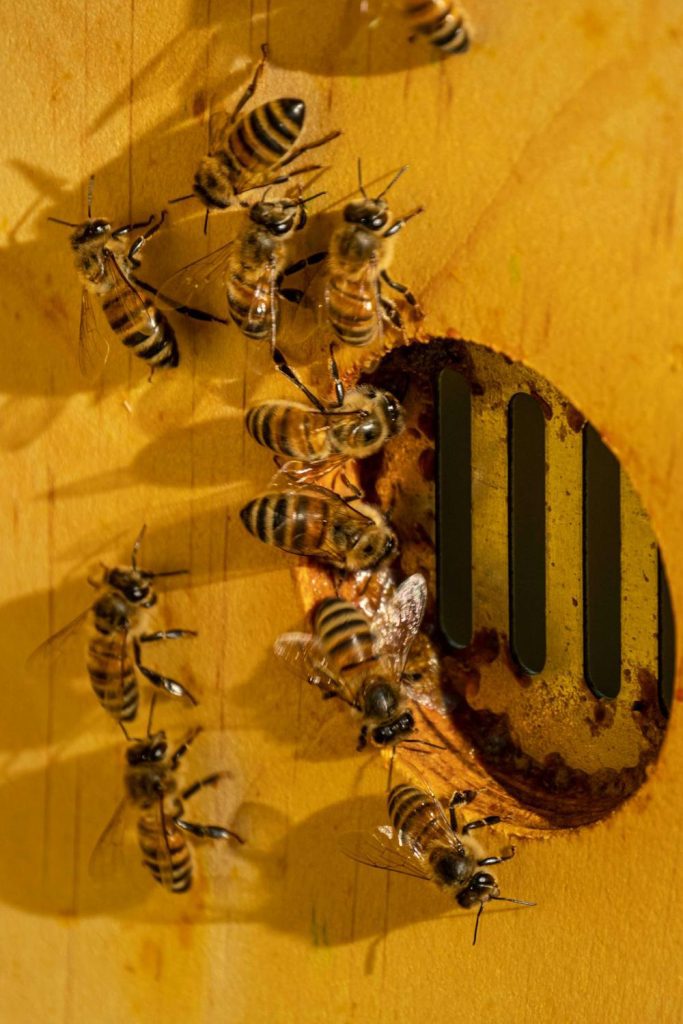
As I gently pried open the hive for my weekly inspection, the crowd of worker bees parted to reveal her majesty—the queen bee, regally traversing the frame as her attendants followed in perfect formation. I find myself in awe of this remarkable creature who silently commands an entire colony of thousands.
The queen bee isn’t just larger than the others—she’s the beating heart of the hive, the linchpin that holds the complex social structure together. Without her, the colony would quickly spiral into decline. Yet many beekeepers and bee enthusiasts don’t fully appreciate just how extraordinary these royal insects truly are.
Today, I’m pulling back the curtain on the mysterious life of the queen bee. From her specialized biology to her fascinating behavior, we’ll explore everything that makes her the most vital member of the hive. Whether you’re a seasoned beekeeper or simply curious about these amazing creatures, you’re about to discover why the queen deserves her crown.
The Biology of the Queen Bee: Built for Royalty
When you place a queen bee next to a worker, the differences are immediately apparent. At nearly twice the size of workers, the queen’s elongated abdomen houses her impressive reproductive system—the defining feature that sets her apart from every other female in the colony.
I remember the first time I successfully identified a queen without her colored marking dot. Her long, tapered abdomen and distinctive movement pattern made her stand out from the bustling workers around her. The queen’s legs are often lighter in color, and her thorax (middle section) appears shiny and less hairy than workers.
What truly separates the queen from other bees isn’t just her appearance but her incredible longevity. While worker bees live a mere 6 weeks during active seasons, a healthy queen can survive for 3-5 years! I’ve had several queens in my apiary reach their fourth birthday, still laying eggs at an impressive rate.
The queen’s reproductive system is nothing short of extraordinary. Unlike workers, whose ovaries remain undeveloped, the queen possesses fully functional ovaries containing up to 170-180 ovarioles (egg-producing tubes). This reproductive capacity allows her to lay up to 2,000 eggs daily during peak season—more than her own body weight!
Another fascinating biological difference lies in her stinger. Unlike the barbed stinger of worker bees, which tears from their bodies after use (causing death), the queen’s stinger is smooth and can be used multiple times. However, she typically reserves this weapon for battling rival queens rather than hive defense.
See More: Inside the Hive: What Do Worker Bees Actually Do?
From Humble Egg to Royal Ruler: The Queen’s Development
Perhaps the most fascinating aspect of queen bees is that they aren’t born special—they’re made. Any fertilized egg (which would normally develop into a worker) can become a queen if given the right nutrition at the right time.
When a colony needs a new queen, nurse bees select several young larvae (less than 3 days old) and begin feeding them exclusively with royal jelly—a rich secretion produced by glands in the nurse bees’ heads. While all bee larvae receive royal jelly for their first few days, only future queens continue this specialized diet throughout development.
This nutritional difference triggers dramatic physiological changes. I’ve watched this remarkable transformation unfold in my own queen-rearing projects. The queen cells themselves are architectural marvels—hanging vertically from the comb like peanut shells, unlike the horizontal hexagonal cells of workers and drones.
The queen’s development occurs at an accelerated pace:
- Egg stage: 3 days
- Larval stage: 5-6 days
- Pupal stage: 7-8 days
In just 16 days from egg to emergence (compared to 21 days for workers), a new queen hatches from her cell. This quicker development ensures the colony remains queenless for the shortest possible time.
When a virgin queen emerges, she often makes a distinctive piping sound—a high-pitched series of toots that announces her presence. If multiple queen cells develop simultaneously, the first queen to emerge will typically seek out and destroy her unhatched rivals by stinging through their cell walls. I’ve witnessed this brutal but essential succession battle firsthand during hive splits.
The Mating Flight: A Dangerous Journey for Dynasty
Around 5-10 days after emergence, the virgin queen undertakes the most perilous journey of her life—the mating flight. I always feel a mixture of anxiety and excitement when I spot a virgin queen preparing for this crucial moment.
On warm, sunny afternoons, the virgin queen leaves the safety of her hive and flies to drone congregation areas (DCAs)—specific locations where male bees gather in hopes of mating. How bees identify these aerial meeting spots remains one of beekeeping’s fascinating mysteries, as DCAs remain consistent year after year, even when generations of bees have passed.
The queen doesn’t mate with just one drone—she’ll mate with 12-20 different males during several mating flights over a few days. This polyandry (mating with multiple males) is crucial for genetic diversity within the colony. Each drone dies immediately after mating, his abdomen rupturing in the process—the ultimate sacrifice for the colony’s future.
During these flights, the queen collects approximately 5-6 million sperm, which she stores in a specialized organ called the spermatheca. This sperm supply must last her entire lifetime, as she never mates again. The quality of these mating flights directly impacts the future success of the colony—a poorly mated queen with insufficient sperm will fail prematurely, forcing the colony to replace her.
I’ve learned to identify the signs of a successfully mated queen: her abdomen appears fuller, her movement becomes more deliberate, and within a few days, she begins laying eggs in a tight, organized pattern across the comb.
The Queen’s Daily Life: Egg-Layer and Chemical Commander
Once mated, the queen begins her lifelong vocation—laying eggs. During peak season, a productive queen can lay up to 2,000 eggs daily, working in a methodical pattern across the comb. I find it mesmerizing to watch as she inspects each cell, deposits an egg, and moves on with precision.
What many people don’t realize is that the queen controls the sex of her offspring. When she lays an egg, she can either fertilize it with stored sperm (producing a female worker or potential queen) or leave it unfertilized (producing a male drone). This remarkable ability to determine offspring sex is called haplodiploidy.
The queen makes this decision based on the cell size—worker cells are smaller than drone cells—and the colony’s needs. I’ve observed queens almost never laying unfertilized eggs in worker-sized cells unless they’re running out of stored sperm.
Beyond egg-laying, the queen exerts control through pheromones—chemical messengers that influence colony behavior. These queen mandibular pheromones (QMP) are the most powerful social regulators in the hive, affecting everything from worker development to swarm timing.
The queen doesn’t roam the hive freely but moves with an entourage of attendant workers—the “queen court.” These 8-10 devoted workers feed her, groom her, and distribute her pheromones throughout the colony. They constantly face the queen, forming a circle around her and touching her with their antennae to collect pheromones.
I’ve spent countless hours observing this fascinating relationship. The attendants lick the queen’s body, gathering pheromones which they then share with other workers through food exchange. This creates a pheromone cascade that reaches every bee in the colony within hours.
The Queen’s Communication System: Chemical Governance
The queen’s pheromone communication system is perhaps the most sophisticated chemical signaling network in the insect world. Rather than a single pheromone, the queen produces a complex cocktail of chemicals that collectively regulate hive function.
Queen mandibular pheromone (QMP) contains at least five major components, including 9-ODA (9-oxo-2-decenoic acid), which has several crucial functions:
- It suppresses worker ovary development, preventing workers from laying eggs
- It attracts drones during mating flights
- It stimulates workers to forage and build comb
- It provides colony cohesion and prevents new queen cells from being built
I’ve witnessed the dramatic effect of these pheromones when introducing a new queen to a colony. Initially, workers may ball and attack her as a foreign intruder. But once her pheromones begin to circulate, the colony gradually accepts her authority.
As queens age, their pheromone production diminishes. I can often tell when a queen’s pheromone output is declining before seeing any change in her egg-laying. The workers become slightly more agitated, and the tight brood pattern begins to deteriorate. This chemical decline triggers the colony to prepare for supersedure—the process of quietly replacing an aging queen while she’s still present.
When conducting hive inspections, I always handle frames with the queen gently, as excessive disturbance can disrupt pheromone distribution and cause temporary chaos in the colony.
When Things Go Wrong: Queen Troubles and Colony Response
Despite her importance, the queen isn’t immune to problems. Over my beekeeping career, I’ve encountered virtually every queen issue possible, from injury during inspections to disease and genetic defects.
A failing queen shows several telltale signs:
- Spotty brood pattern with empty cells scattered among developing brood
- Increased drone production in worker cells (indicating the queen is running out of stored sperm)
- Multiple eggs per cell (usually indicating a laying worker problem after queen loss)
- Declining population and reduced colony morale
When a queen is failing but still present, the colony often initiates a “quiet supersedure”—building just one or two queen cells to replace her without swarming. I’ve found these supersedure cells typically located on the face of the comb rather than at the bottom edge.
In cases of sudden queen death, the colony enters emergency mode. The absence of queen pheromones triggers worker bees to select several young larvae (less than three days old) and quickly convert their cells into emergency queen cells. These distinctive cells hang vertically and look like peanut shells protruding from the comb.
When my colonies become completely queenless without the resources to raise a new queen, I’ve observed a disturbing phenomenon: some worker bees’ ovaries activate, and they begin laying unfertilized eggs. These “laying workers” produce only drones, and the colony’s population dwindles as no new workers are produced. At this point, intervention is necessary, as laying worker colonies rarely accept new queens.
The most fascinating aspect of these colony responses is how quickly bees detect queen problems. Their sensitivity to changing pheromone levels allows them to identify issues long before they become catastrophic—a lesson in proactive management that still impresses me after all these years of beekeeping.
The Beekeeper’s Relationship with the Queen: Finding, Marking, and Managing
For beekeepers like me, developing a good relationship with the queen—or more accurately, learning to manage queens effectively—is essential for successful beekeeping.
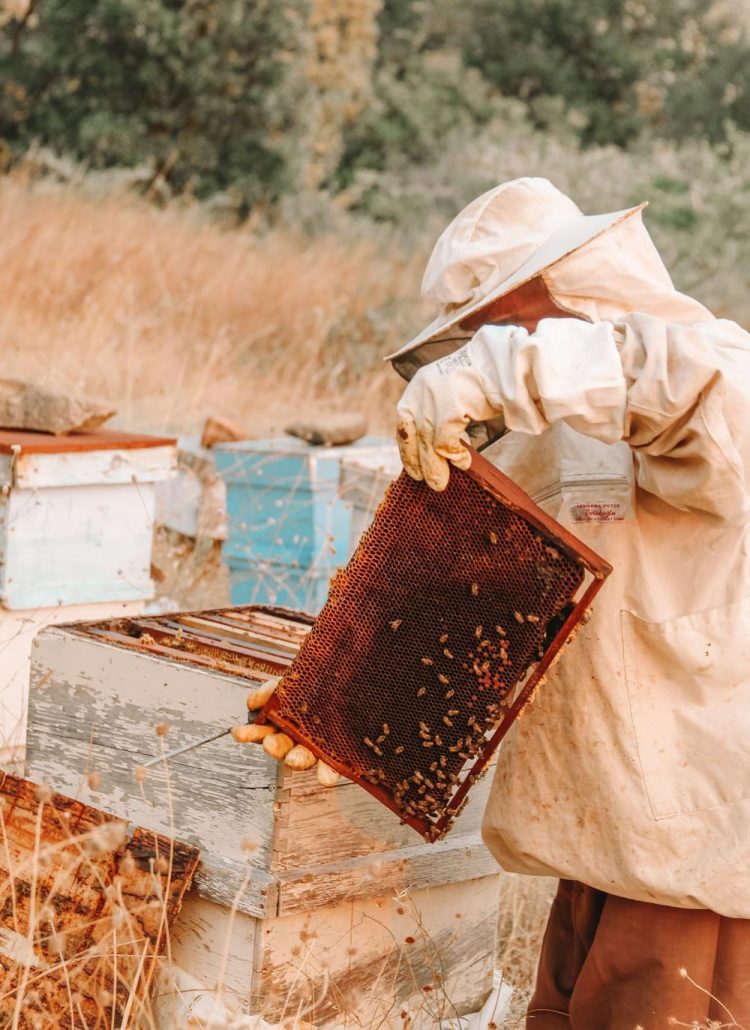
Finding the queen during inspections is often described as the beekeeping equivalent of “Where’s Waldo?” After years of practice, I’ve developed a systematic approach: I start at one side of the brood nest and methodically check each frame, looking for her distinctive shape and movement pattern rather than just her size.
Many beekeepers, myself included, mark queens with a small dot of paint on their thorax. This not only makes them easier to find but also helps track their age. The international color code makes it simple: white for years ending in 1 or 6, yellow for 2 or 7, red for 3 or 8, green for 4 or 9, and blue for 5 or 0.
The first time I marked a queen, my hands trembled so much I was certain I’d injure her. Now, using a marking cage and gentle technique, it’s a routine procedure that takes just moments but saves hours of searching throughout the season.
Introducing a new queen to an established colony requires finesse. Bees recognize their queen primarily by pheromone, not appearance, so new queens must be introduced gradually. I use introduction cages that allow workers to become accustomed to the new queen’s scent before she’s released. The success rate improves dramatically when the colony has been queenless for 24-48 hours before introduction.
Requeening—the process of replacing an existing queen—is sometimes necessary for various reasons: poor egg-laying, undesirable genetic traits, or simply as part of a management strategy to prevent swarming. I typically requeen every two years to maintain vigorous, productive colonies.
Queen Breeding and Selection: Shaping the Future of Beekeeping
After several years of keeping bees, I became fascinated with queen rearing—the process of raising new queens with selected genetic traits. This aspect of beekeeping combines art and science in a way that continually challenges and rewards me.
When selecting breeder queens, I evaluate several crucial characteristics:
- Honey production capability
- Disease and pest resistance (particularly Varroa mite resistance)
- Gentleness and ease of handling
- Overwintering ability in our climate
- Low swarming tendency
- Hygienic behavior (the ability to detect and remove diseased brood)
I’ve experimented with various queen-rearing methods, from the simple Doolittle method (grafting young larvae into artificial queen cups) to more complex systems like the Cloake board method. Each approach has advantages, but all require careful attention to timing and environmental conditions.
Perhaps the most important decision in queen rearing is controlling breeding. Open-mated queens (those who fly freely to mate) are easier to produce but offer less genetic control since they’ll mate with whatever drones are in the area. Instrumental insemination provides complete control but requires specialized equipment and skills.
I’ve found a middle ground by establishing mating yards in relatively isolated locations where I can flood the area with drones from selected colonies. While not perfect, this approach improves the odds of good mating while remaining accessible to hobbyist beekeepers.
The genetic diversity that comes from multiple matings creates a more resilient colony. Research has shown that colonies with genetically diverse workers (from a queen mated with many drones) handle disease better, forage more efficiently, and maintain more stable internal hive temperature than colonies with less genetic diversity.
As climate change and new pests create challenges for beekeepers, selective breeding for adaptive traits becomes increasingly important. I believe the future of sustainable beekeeping lies in developing locally adapted queen stock rather than relying on queens shipped from distant locations with different environmental conditions.
Lessons from the Heart of the Hive
After spending thousands of hours observing queens and their colonies, I’ve developed a profound respect for these remarkable insects. The queen bee embodies both power and vulnerability—absolute in her reproductive dominance yet completely dependent on her workers for survival.
Despite her royal title, the queen isn’t actually in charge in the way we might imagine. She doesn’t direct worker activities or make colony decisions. Instead, she serves as the reproductive center and pheromonal hub around which the colony organizes itself. It’s a fascinating example of decentralized intelligence that continues to inspire researchers in fields ranging from computer science to organizational management.
What still amazes me most about queen bees is how their presence transforms a collection of individual insects into a cohesive superorganism. Remove the queen, and within hours, the colony’s behavior changes dramatically. Return her, and harmony is restored almost immediately.
I’ve come to see the queen-worker relationship as the perfect biological partnership. The workers cannot reproduce but gain evolutionary advantage by supporting a related individual who can. The queen cannot feed herself or regulate hive temperature but gains protection and support for her reproductive role. This interdependence creates one of nature’s most successful life strategies.
For those just beginning their beekeeping journey, I encourage you to develop a deeper appreciation for your queens. Take time to observe them, understand their cycles, and recognize the subtle ways they influence every aspect of colony life. The more you learn about these extraordinary insects, the more successful you’ll be as a beekeeper.
And for those who have never kept bees but are fascinated by them, I hope this glimpse into the queen’s world has given you a new perspective on these incredible creatures. The next time you enjoy honey or watch bees pollinating flowers, remember the remarkable queen at the center of it all—an insect that truly deserves the title “Her Majesty.”
Ready to Explore More About Queen Bees?
If you’ve enjoyed learning about queen bees, I invite you to share your thoughts or questions in the comments below. Have you ever spotted a queen bee in your hive or had an interesting experience with queen rearing? I’d love to hear about it!
For those interested in deepening their knowledge, consider these resources:
- Join a local beekeeping association where you can learn hands-on queen-finding techniques
- Explore queen-rearing workshops offered by experienced beekeepers in your area
- Check out my related articles on preparing for the beekeeping season and understanding worker bee development
Until next time, may your hives be heavy with honey and your queens be prolific!

Leave a Reply